Complete oil recovery from plants being dismantled, relocated or decommissioned

When a plant shuts down, the oil has to come out before anything can be cut, sold or moved. It sits in gearboxes, hydraulic reservoirs, turbine sumps, transformers and DG sets — not in drums. Draining it is slow, awkward work, and under the Hazardous and Other Wastes Rules 2016 it can only be moved by an authorised handler.

CPCB Registered Recycler · RPCB Hazardous Waste Authorisation · ISO 9001:2015 · Operating since 1986
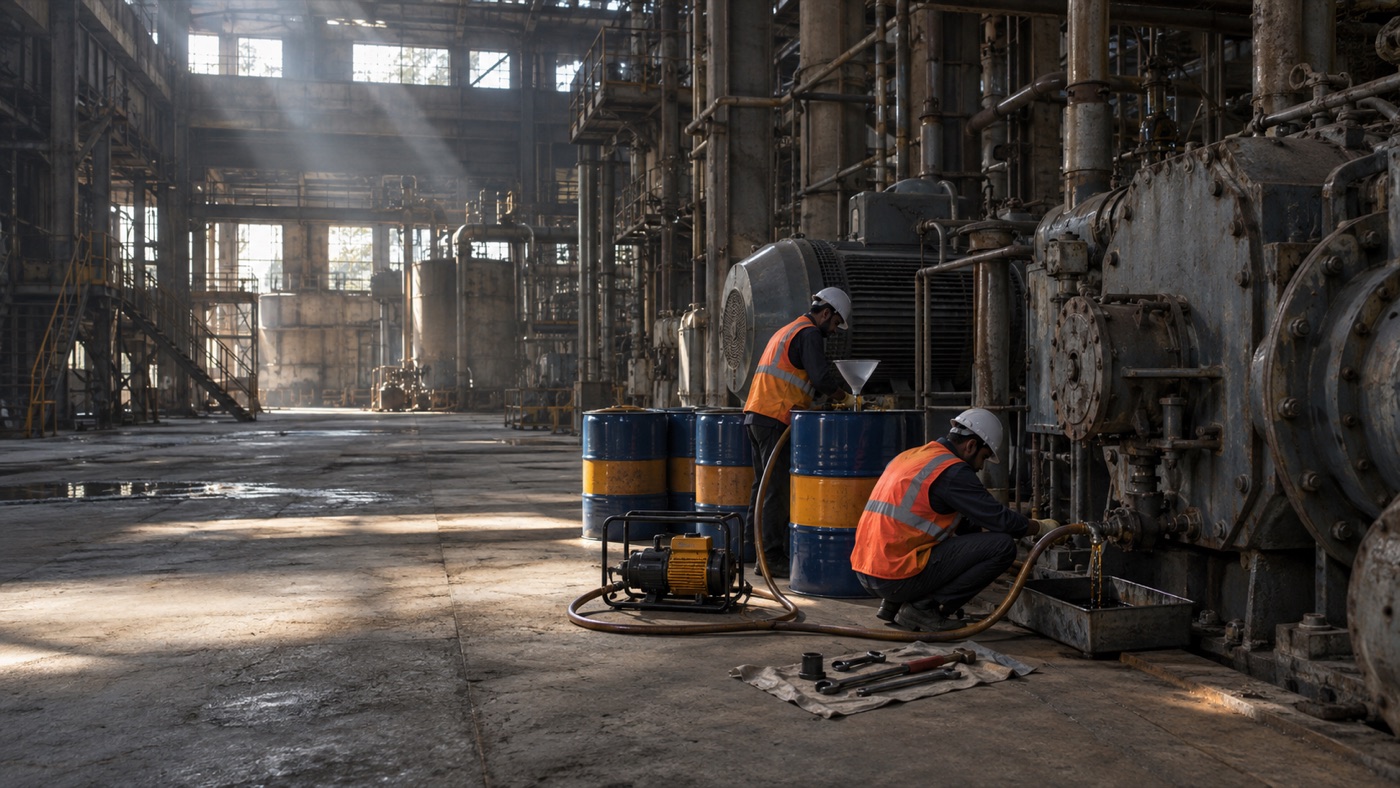
Oil being drained from plant machinery during decommissioning

What we drain

DG sets
Sump oil, lube oil tanks, day tanks and filters — including sets that have not run for years.
Gearboxes & drives
Reduction gearboxes, mill drives, conveyor drives. Multiple drain points per machine, each needing a different method.
Hydraulic systems
Reservoirs, accumulators, cylinders and the oil left standing in the lines.
Turbines & compressors
Turbine lube oil systems, compressor crankcases and separators.
Transformers
Transformer oil drained and manifested separately. We test for PCB before accepting any transformer oil — and we will tell you if a unit fails.
Tanks, sumps & pipelines
Storage tank bottoms, oil-water separators, collection pits and line drainage.

The scale we work at

We take on decommissioning and complete drain-down work at heavy process plants — fertilizer complexes, power stations, cement and steel works, chemical plants and captive power installations. One recent engagement alone covered close to two lakh litres of oil held across plant machinery, drained point by point and lifted under manifest.

Oil held inside machinery, not in drums
The drummed portion was four working days’ work. The machine-held portion was the reason the lifting period had to be extended — it was scattered across the plant and had to be drained point by point.
No electricity in the plant area
Decommissioned plants are dead. We plan around it, with portable pumping and lighting, rather than asking the site to re-energise.
A different tool for each drain point
Oil has to be drained precisely from several different parts of each machine, each needing its own tool and method. This is why it takes longer than people expect, and why we quote it honestly.
We work around your programme
If the seller or the dismantler needs a machine or an area cleared on priority, we clear it first. We do not hold up your schedule.
Your dismantling contractor probably cannot legally move this oil

Used oil is a listed hazardous waste under the Hazardous and Other Wastes (Management and Transboundary Movement) Rules 2016. Moving it requires an authorisation from the State Pollution Control Board. Most scrap and dismantling contractors do not hold one — which means they cannot transport it, and cannot issue you a manifest. Until the oil is documented into an authorised recycler, the liability stays with you as the generator.

Form 10 manifest
Issued for every consignment, with vehicle and driver documentation.
Weighbridge records
Quantities recorded and reconciled, so your figures and ours agree.
Disposal certificate
From a CPCB-registered recycler — the document a board asks for at inspection.
Re-refined, not burned
The oil goes to our own licensed re-refinery and returns to the lubricant chain. You can say so in your reporting, and show the paperwork behind it.

We buy the oil, or we quote the work — whichever is fairer

Where the recoverable volume justifies it, we bid for the oil as a lot and carry the recovery cost ourselves. Where the oil is thinly spread across a large plant and the labour outweighs the value, we quote the recovery as a service. We will tell you which applies after we have walked the site, and we will tell you if the answer is the one that suits you less.