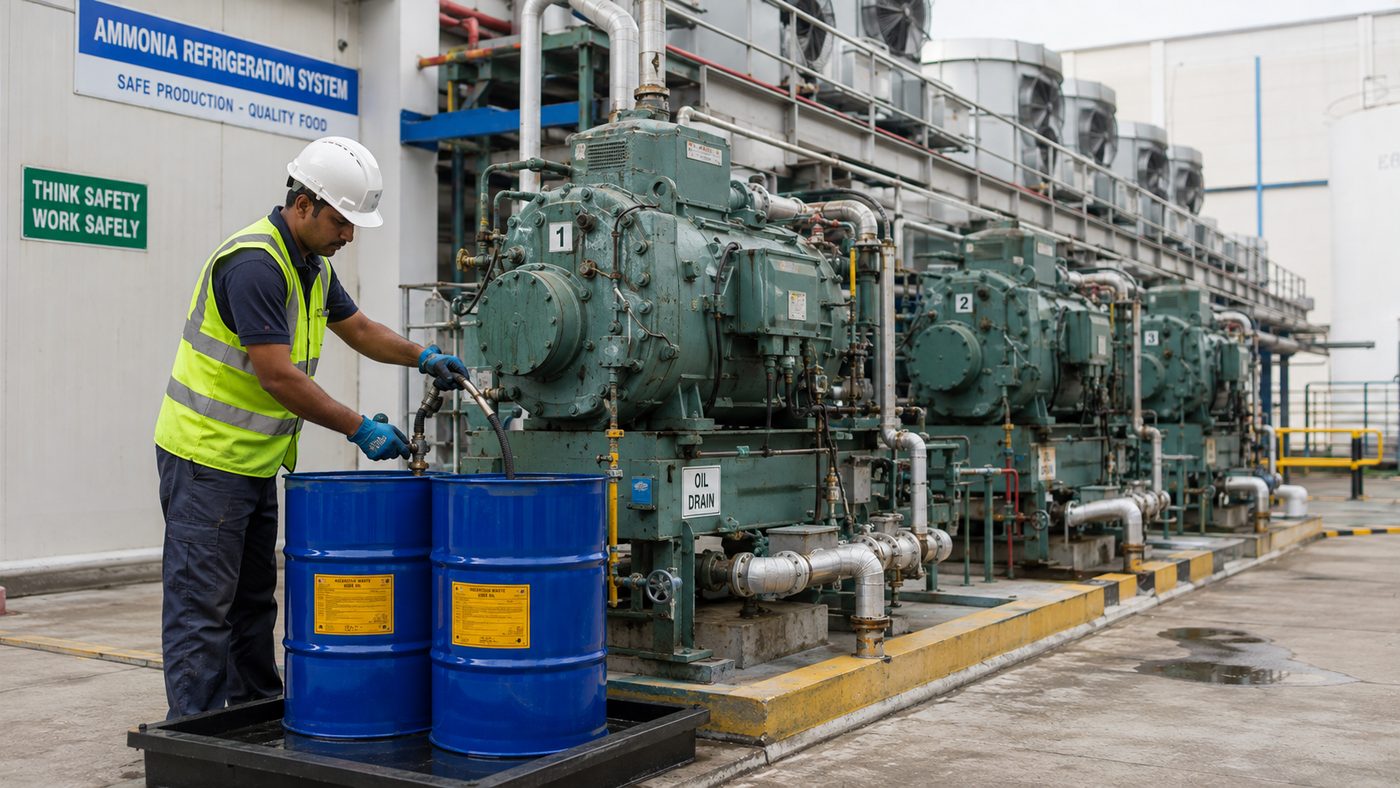
Food and dairy plants run large ammonia refrigeration systems, and compressor oil is the dominant stream. The critical point in this sector is segregation: used lubricating oil and used cooking oil are entirely different waste streams with different rules, and mixing them creates a compliance problem.
Each stream is lifted and manifested separately where it is stored separately. Segregated oil is worth more than a mixed drum — to you and to us.
Indicative of the kind of operation we collect from. Listing a company name here is an industry reference, not a claim of an existing contract.
Indicative only. The actual price depends on quantity, water and solids content, segregation, packing and distance. We test before we quote rather than after we lift.
Typically an annual contract with an authorized vendor, managed by the plant's engineering or EHS function. Food-safety audits mean vendor documentation is scrutinised closely.
No, and they must never be mixed. Used cooking oil goes to the biodiesel or UCO route under FSSAI's RUCO framework; used lubricating oil is hazardous waste under Category 5.1. We handle used lubricating oil.
Ammonia refrigeration compressor oil, in almost every case. Cold storage and freezing capacity drives the volume.
No. Lifting is arranged from the utility or engineering block, away from production and packing areas, at a time the plant nominates.
Yes. We provide the Form-10 manifest chain plus our CPCB and RPCB authorizations, ISO 9001, 14001 and 45001 certificates for the vendor file.
Yes. Standalone cold stores run substantial ammonia compressor fleets and are good collection points, particularly grouped on a route.
Send us the oil type, approximate annual quantity and location. We will come back with a landed price and a lifting schedule — and if a stream falls outside our authorization, we will tell you that instead.
Get a quote on WhatsApp