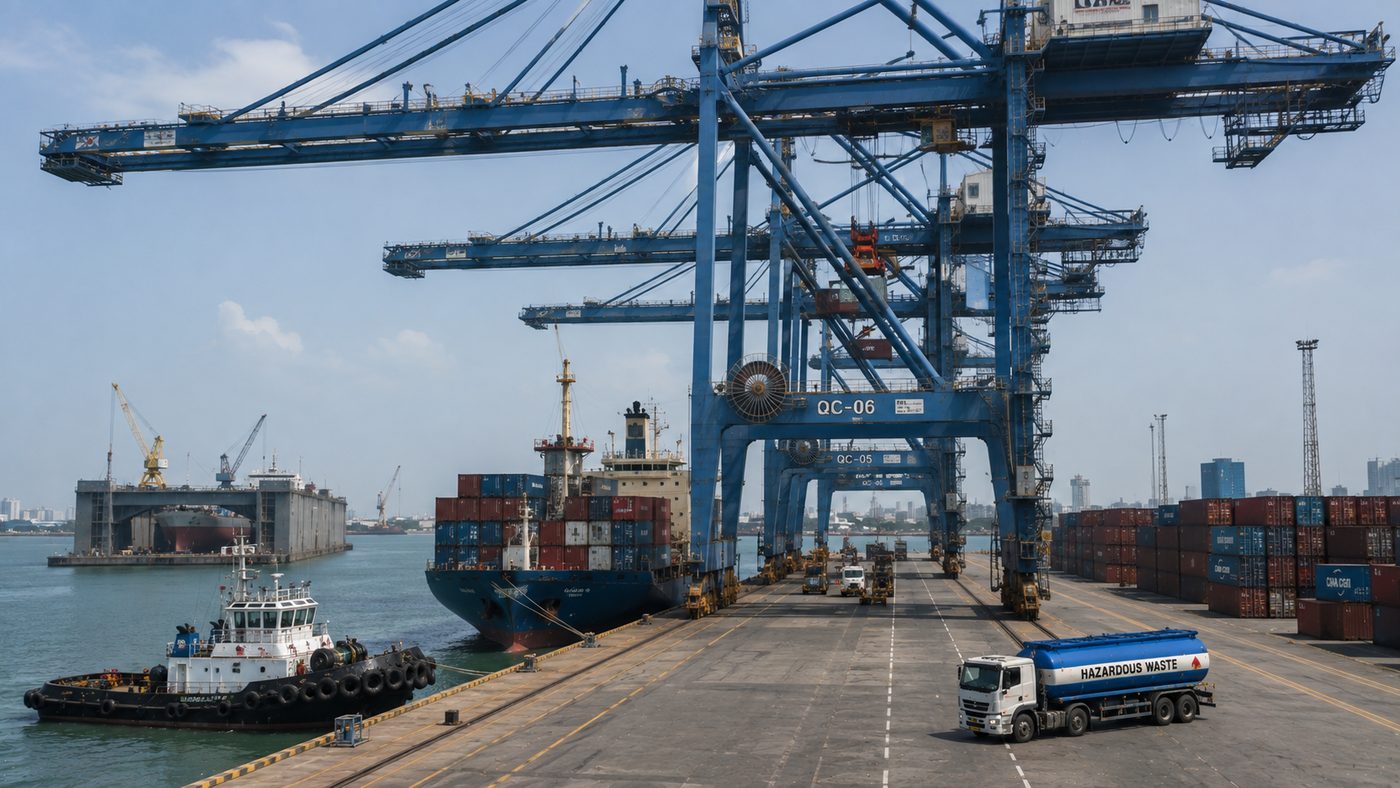
Ports run cranes, tugs, dredgers and a heavy equipment fleet, and shipyards add machine shops and dry-dock operations. Volumes are substantial and the compliance environment is stricter than most, with port trust and maritime rules layered on top of the Hazardous Waste Rules.
Each stream is lifted and manifested separately where it is stored separately. Segregated oil is worth more than a mixed drum — to you and to us.
Indicative of the kind of operation we collect from. Listing a company name here is an industry reference, not a claim of an existing contract.
Indicative only. The actual price depends on quantity, water and solids content, segregation, packing and distance. We test before we quote rather than after we lift.
Major port trusts and PSU shipyards use MSTC and GeM; private terminal operators contract directly. Port entry passes and safety clearance add a step to mobilisation, so lead time matters.
No. MARPOL Annex I waste from ships — bilge water, oily sludge and slops — is handled under the port reception facility regime and is a different stream. We collect shore-side used lubricating oil from port and yard equipment.
Yes. We supply vehicle, driver and crew details in advance for gate passes and comply with the terminal's safety induction requirements.
Yes — they are among the largest single charges in the sector and suit bulk tanker lifting.
Yes. Private terminals generally contract directly, which is often faster than the auction route.
Water ingress is common near the quay. Moderate levels are manageable; we test before quoting so there are no surprises for either side.
Send us the oil type, approximate annual quantity and location. We will come back with a landed price and a lifting schedule — and if a stream falls outside our authorization, we will tell you that instead.
Get a quote on WhatsApp