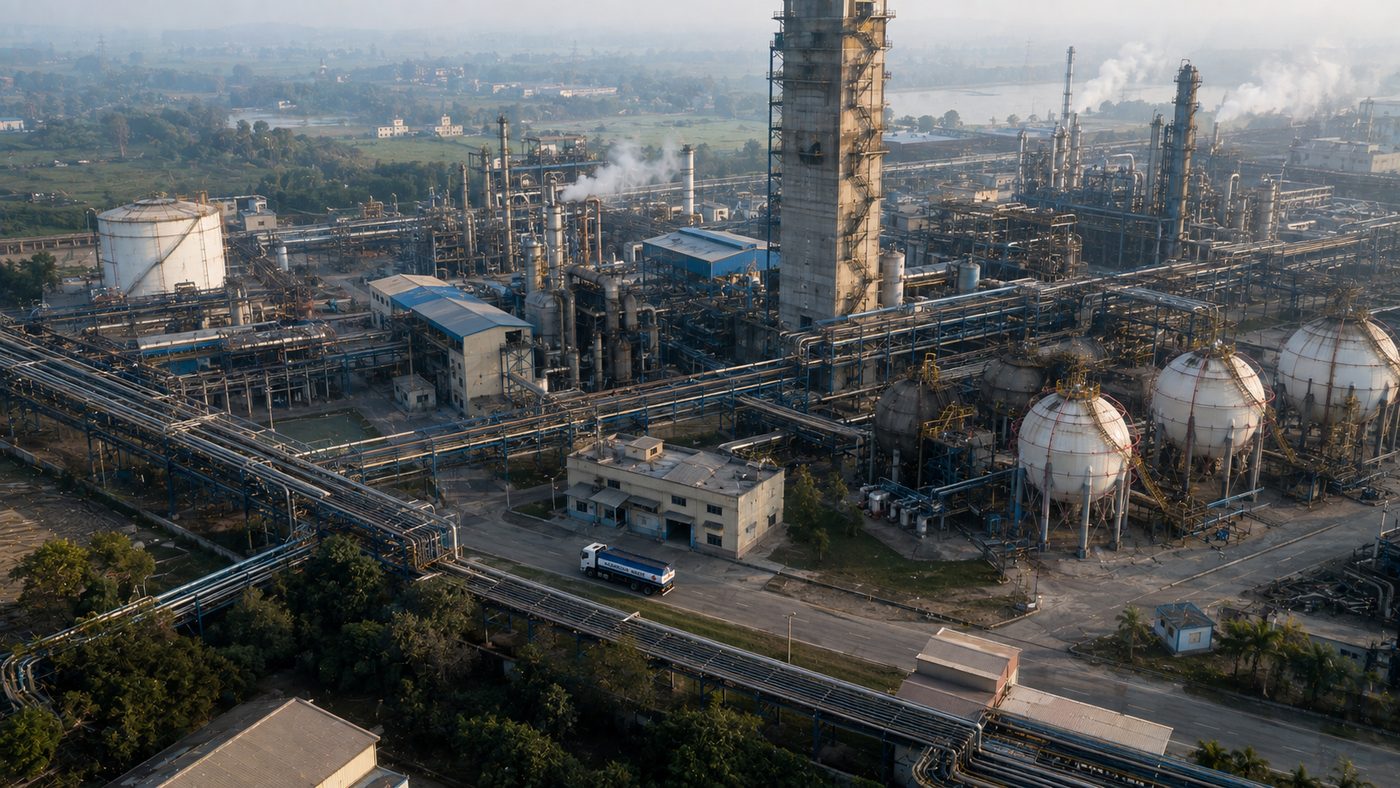
Ammonia and urea trains run large centrifugal compressors, steam turbines and reduction gearboxes. The oil charges are big, the change-outs are scheduled, and the drained oil is clean, segregated and well documented — among the best feedstock in Indian industry.
Each stream is lifted and manifested separately where it is stored separately. Segregated oil is worth more than a mixed drum — to you and to us.
Indicative of the kind of operation we collect from. Listing a company name here is an industry reference, not a claim of an existing contract.
Indicative only. The actual price depends on quantity, water and solids content, segregation, packing and distance. We test before we quote rather than after we lift.
Most large fertilizer complexes dispose through MSTC e-auction or GeM, with some PSU units running their own portals. Annual rate contracts are available once a track record exists.
Ammonia and CO₂ compressor oil and steam-turbine oil dominate by volume, followed by reduction-gearbox oil. These are scheduled change-outs, so quantities are predictable and the oil is usually clean and segregated.
Yes. Transformer oil is naphthenic rather than paraffinic and is lifted, manifested and processed as a separate stream. Mixing it with lube oil reduces the value of both.
BIOCIL is registered on MSTC and GeM and bids on published lots. For plants that prefer a contract, we can quote an annual rate contract with scheduled lifting.
Form-10 Hazardous Waste Manifest for every consignment, plus copies of our CPCB EPR Recycler Registration (BHA20250073R) and RPCB Hazardous Waste Authorization for your compliance file.
Yes, and we prefer it. Bulk tanker lifting is cleaner, faster and avoids drum handling losses. We bring dedicated tankers to avoid cross-contamination.
Send us the oil type, approximate annual quantity and location. We will come back with a landed price and a lifting schedule — and if a stream falls outside our authorization, we will tell you that instead.
Get a quote on WhatsApp