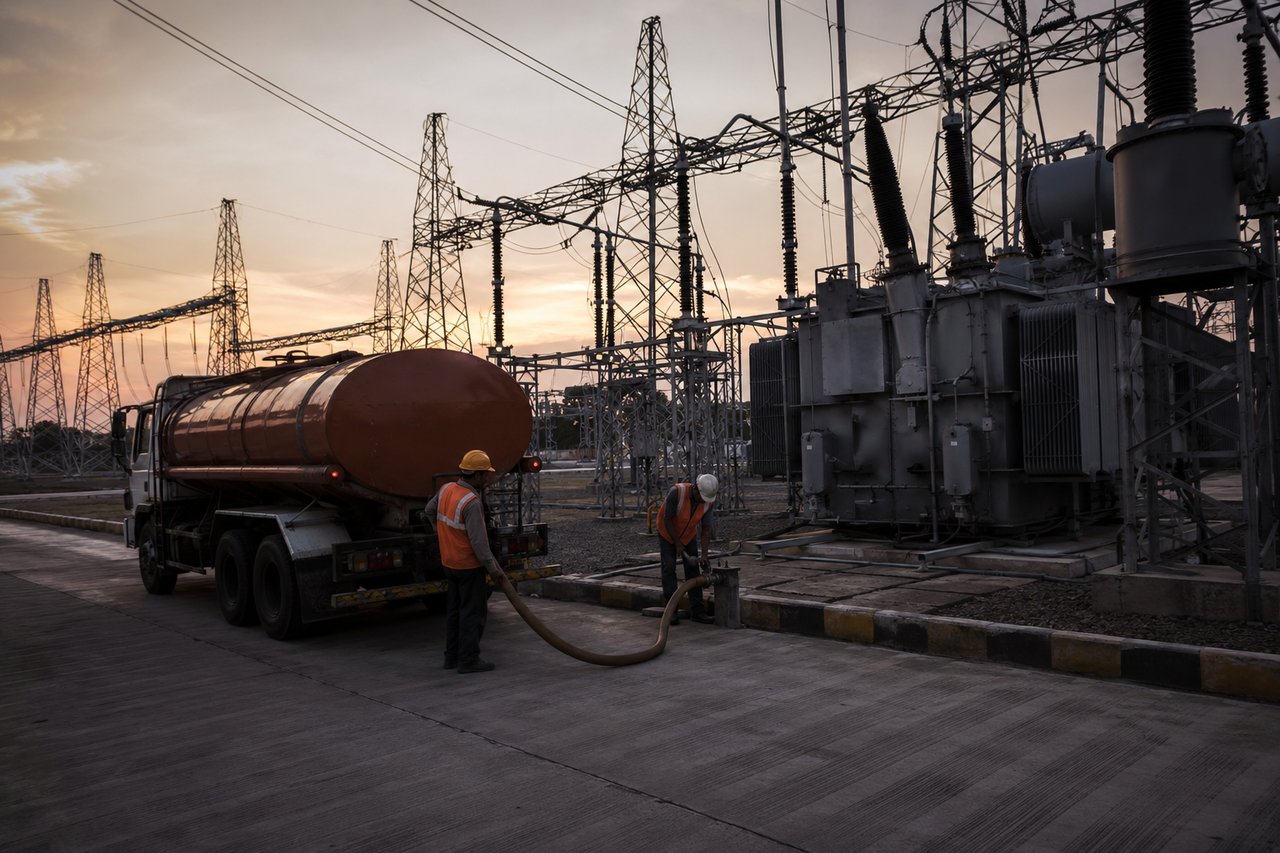
Pan-India collection and CPCB-compliant re-refining of transformer oil, DG set oil, and industrial lubricants. Full documentation. EPR certificates for producers.
Unlike brokers or collectors, BIOC processes every litre at our own CPCB Category IV authorized facility in Vishwakarma Industrial Area, Jaipur. Full process control. Consistent output quality. Direct accountability.
⚗️
Vacuum Distillation + Clay Treatment
Multi-stage re-refining producing BIS-specification Re-Refined Base Oil (RRBO)
📊
20 MT/Day Processing Capacity
~6,000+ MT/year throughput — no backlog, assured turnaround on large institutional pickups
🌱
65–70% Energy Saving vs Virgin Crude
Re-refining avoids ~3–4 tCO₂ per tonne — generates carbon offset value under India's CCTS framework
🛢️
RRBO Output Sold to National Oil Companies
Re-Refined Base Oil supplied to HPCL and leading petrochemical processors — proof of consistent BIS-grade output
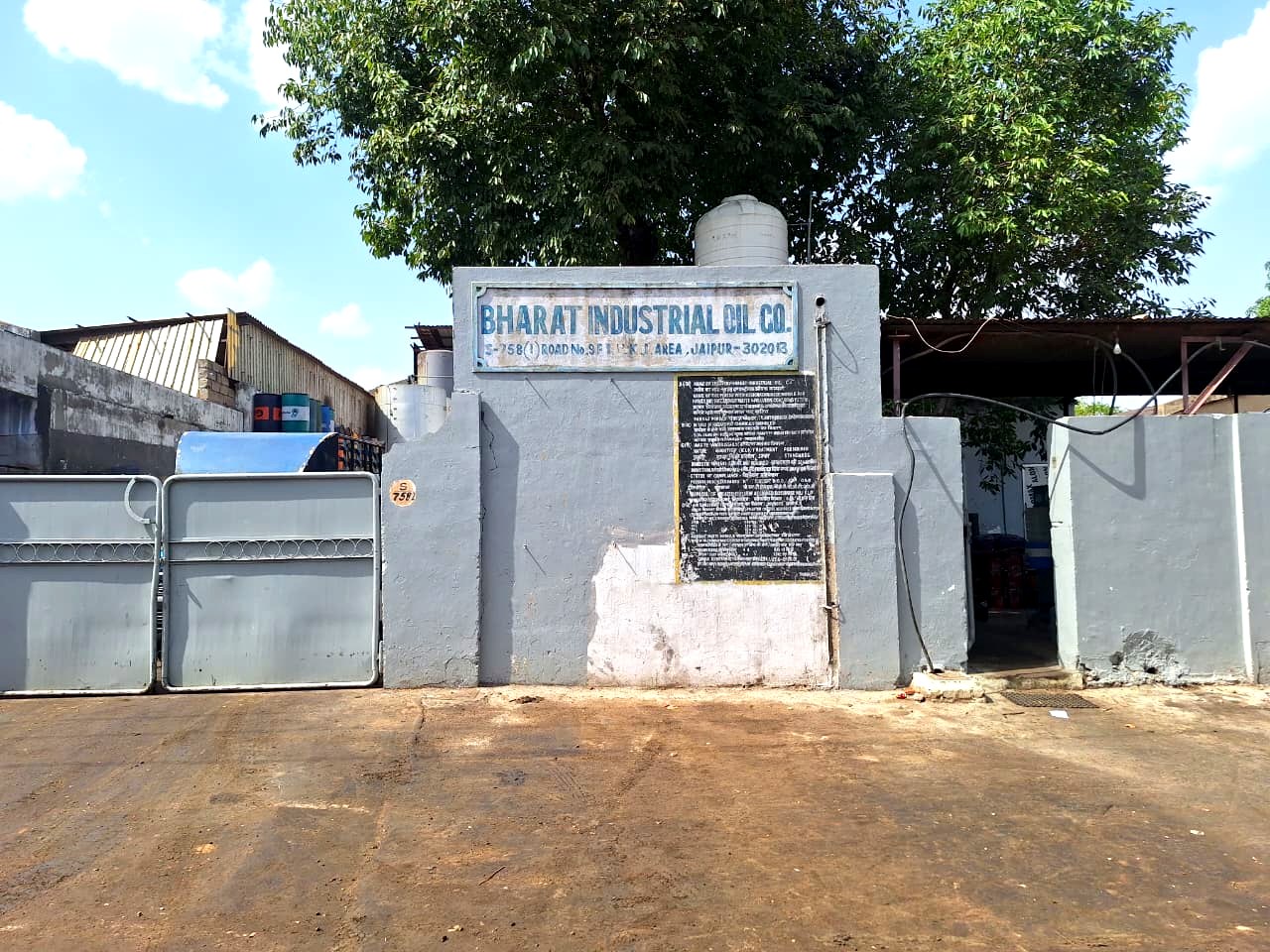
📍 Our Actual Plant — S-758(I) VKIA, Jaipur
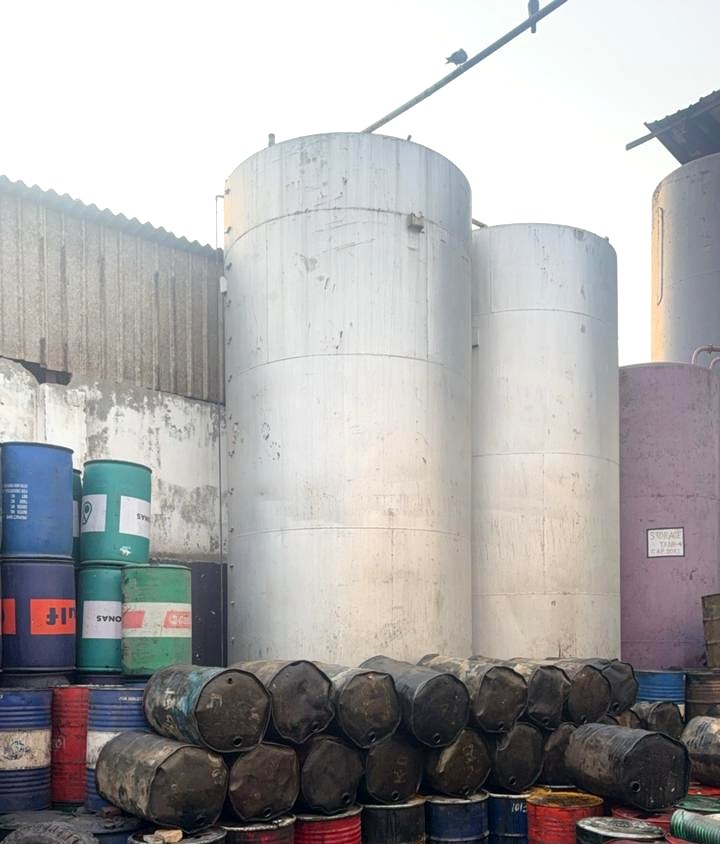
🛢️ Storage Tanks — 100+ MT Live Capacity
Plant Credentials at a Glance
1986
Year Established
Cat IV
CPCB Authorization
16
Oil Categories Accepted
20+
States Collection Reach
📍 Plant Address
S-758(I), Road 9-F-1 Vishwakarma Industrial Area (VKIA) Jaipur, Rajasthan 302013
Sustainability
Motor oil does not wear out. It only gets dirty.
Lubricating oil is not consumed in service. Its base molecules survive — what fails is the additive package, and what accumulates is water, soot, wear metals and fuel dilution. Remove those and the base oil is as good as the day it was blended. That single fact is why re-refining beats burning, and it is the whole of our business.
42 : 1
It takes 42 gallons of crude oil, but only one gallon of used oil, to produce the same 2.5 quarts of high‑quality lubricating oil.
~1/3
Re‑refining used oil takes about one‑third the energy of refining crude oil to lubricant quality — before any other environmental benefit is counted.
3,240 MT
Our licensed annual capacity. Every tonne re‑refined is a tonne of base oil that does not have to be pulled out of the ground, distilled and shipped.
ISO 14001
Our environmental claims sit inside an independently audited Environmental Management System — not a marketing statement.
Ratio and energy figures: US Environmental Protection Agency, Managing, Reusing and Recycling Used Oil. In metric terms, roughly 159 litres of crude or 3.8 litres of used oil yield the same 2.4 litres of finished lubricant.
Recovered, not burned
Burning used oil as furnace fuel releases its carbon and its heavy metals in a single pass, and destroys a material that took a barrel of crude to create. Re‑refining returns it to the lubricant chain. Our route is thermal and physical — vacuum distillation and clay finishing, with no acid treatment and no acid‑sludge stream to dispose of afterwards.
Kept out of soil and groundwater
Used oil tipped into a drain or onto ground carries its wear metals and additive residues straight into soil and water. Routing it to an authorized re‑refiner is the only lawful disposal route under the Hazardous and Other Wastes Rules 2016 — and the only one that leaves you with a document to show for it.
Auditable for your reporting
Every consignment generates Form 10, the statutory manifest, issued from our end, and a disposal certificate on receipt and weighment. Together they give your pollution‑control file, annual returns and sustainability reporting an auditable chain from your site to a licensed recovery facility. We also hold CPCB EPR registration, so volumes routed through us count toward producer obligations.
📋 Credentials
Authorizations & Compliance Certificates
Every authorization maintained current. Available for verification by procurement officers, PCB auditors, and compliance teams.
🏛️
CPCB Authorization
Central Pollution Control Board — Hazardous Waste (Management, Handling & Transboundary Movement) Rules 2016. Category IV re-refiner.
Quality Management System certified for the manufacture and supply of re-refined base oils and lubricating oils. Certificate 26DQQD43, issued by ROHS Certification Pvt. Ltd. under Emirates International Accreditation Centre. Valid to 20 August 2029.
Environmental Management System. Certificate UCS-092026-E-11, issued by Universal Certification Services Pvt. Ltd. under ISO/IEC 17021-1:2015. Scope: manufacturing and supply of re-refined base oils and lubricating oils, at our VKI Area plant. Valid to 31 August 2029, with annual surveillance audits.
Occupational Health & Safety Management System. Certificate UCS-092026-O-12, issued by Universal Certification Services Pvt. Ltd. under ISO/IEC 17021-1:2015. Same scope and site as our environmental certification. Valid to 31 August 2029, with annual surveillance audits.
Our three management-system certificates are issued under ISO/IEC 17021-1:2015, the standard governing bodies that audit and certify management systems, and our certification body is listed on IAF CertSearch — the International Accreditation Forum's global database, where any buyer can independently validate a certificate rather than take a scan on trust.
Each certificate names the scope explicitly — manufacturing and supply of re-refined base oils and lubricating oils — and is issued against our plant address at VKI Area, Jaipur, so it covers the product and the site an overseas buyer is actually qualifying. Certificate numbers, surveillance-audit dates and expiry are shown above; originals are sent with vendor-registration packs on request.
Need a full Vendor Credential Pack?
CPCB auth + EPR registration + RPCB consent + Form-10 sample + past compliance returns — packaged for your procurement/EHS team.
Are you a lubricant manufacturer or importer? Under GSR 677(E) effective April 2024, you are legally required to meet annual recycling targets — or face CPCB Environmental Compensation.
BIOC generates EPR certificates on the CPCB Used Oil EPR Portal for every tonne we recycle. As a registered recycler, we transfer certificates directly to your CPCB account — fully audit-ready, no broker needed.
Targets are rising fast. Lock in certificates now before prices increase at the Oct 2026 IEX compliance market launch.
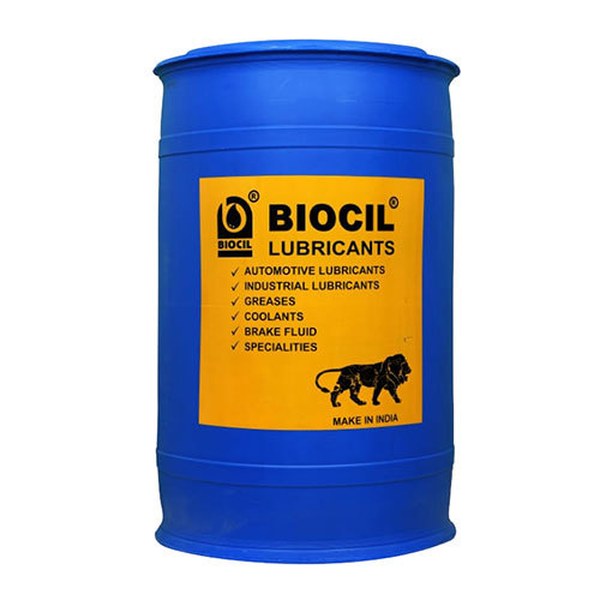
Our re-refined oils are dispatched in BIOCIL-labeled 200L MS drums, 20L and 5L HDPE cans, or in bulk tanker loads. All packaging includes batch number, grade, and CPCB recycle certification.
⚡
Transformer / Insulating Oil
Re-refined insulating oil for power transformers and distribution equipment. Universal Tractor Transmission Oil (UTTO) grade available.
All prices on request. WhatsApp or call for bulk pricing, minimum order quantities, and delivery terms.
⭐ Why Us
Why Choose Bharat Industrial Oil
🏛️
Fully Licensed & Authorized
CPCB authorization, RPCB consent, EPR recycler registration, GeM empanelment. Every pickup is legally defensible with Form-10 manifest and PCB-accepted documentation.
🗺️
Pan-India Collection
We collect from any state — any volume, any distance. Tanker dispatch or coordinated collection agents depending on location. Transport via licensed hazmat tankers.
📄
Zero Documentation Burden
We handle Form-10, waste manifest, quarterly returns, annual EPR filings. You receive a compliance certificate you can show to PCB inspectors — no chasing paperwork.
📜
EPR Certificate Generation
We are a registered recycler on eprusedoil.cpcb.gov.in. Every tonne we re-refine generates CPCB-issued EPR certificates transferable to lubricant producers on the portal.
♻️
Re-Refined Base Oil Output
We produce Re-Refined Base Oil (RRBO) meeting BIS standards — not fuel blending. 65–70% energy saving vs virgin crude. Full circular economy benefit.
🤝
Legacy & Trust
40 years operating in Jaipur. Pan-India contracts with national-level management teams of India's leading telecom operators, power utilities, and hospitality groups. Major environmental compliance consulting firms refer their enterprise clients to us.
🏭 Sectors
Industries We Serve
We collect from every major industrial sector in India — 17 dedicated sector pages covering what each generates, how disposal is procured, and the clusters we lift from.
Everything your EHS officer, procurement head, or compliance team needs to know before working with us.
♻️ For Used Oil Generators
Yes. Under the Hazardous and Other Wastes (Management and Transboundary Movement) Rules 2016, used oil is a Schedule-II hazardous waste. Disposal without a CPCB-authorized recycler is illegal and attracts penalties under the Environment Protection Act 1986 — including fines and facility closure orders. All bulk generators must hand over used oil only to registered recyclers or collection agents. Using an unregistered party exposes your organization to PCB audit risk.
You receive: (1) Form-10 Hazardous Waste Manifest — the legally mandated 7-copy movement document signed by both sender and receiver at the time of collection; (2) Compliance Certificate from BIOC confirming receipt, quantity, and processing; (3) Annual Returns copy filed with CPCB/RPCB confirming your waste was handled compliantly. All documents are PCB audit-ready and can be submitted to PCB inspectors directly.
Any quantity within Rajasthan; from about 5,000 litres (24 drums) elsewhere. No minimum. Small generators, large DISCOMs, everything in between — just call or WhatsApp +91 81144 93215.
Yes — pan-India coverage. Zone 1 (UP, Haryana, Delhi NCR, MP, Gujarat, Rajasthan): direct tanker dispatch within 3–7 working days. Zone 2 (Maharashtra, Punjab, Bihar, Jharkhand): coordinated logistics via collection agents. Zone 3 (Karnataka, Tamil Nadu, AP, Telangana, WB): via registered collection agents. No state is off-limits. Any quantity in Rajasthan; from about 5,000 litres elsewhere.
In most cases, collection is free — and for good quality transformer oil or lubricating oil in volume, we pay you for the material. For contaminated or low-quality oil or very remote locations, a nominal transport charge may apply. Contact us with your oil type, approximate volume, and location and we will give you an exact quote within 24 hours.
All 16 CPCB-approved categories of used oil: transformer oil, DG set engine oil, hydraulic oil, gear oil, compressor oil, turbine oil, cutting and quenching oils, food-grade used oil, tank bottom sludge, automotive engine oil, spindle oil, white oil, heat treatment oil, rolling oil, and process oils. If your oil type is not listed, call us — we process virtually all Schedule-V hydrocarbon-based oils.
Your oil goes through multi-stage re-refining at our CPCB Category IV authorized plant in Vishwakarma Industrial Area, Jaipur: pre-treatment → vacuum distillation → clay treatment → quality testing. The output is BIS-grade Re-Refined Base Oil (RRBO) supplied to national oil companies including HPCL. This is genuine re-refining — not fuel blending — producing full circular-economy output with a 65–70% energy saving versus virgin crude.
Yes. We can provide your organization's complete compliance documentation package — Form-10 copies, receipt certificates, our CPCB authorization, and EPR registration — formatted for submission to your State PCB. Many of our clients with large DG fleets and transformer banks use our documentation to demonstrate responsible hazardous waste management during ISO 14001 and PCB audits.
📜 For Lubricant Producers (EPR)
EPR (Extended Producer Responsibility) for Used Oil under GSR 677(E) April 2024 requires all manufacturers and importers of base oil and lubrication oil to meet annual recycling targets by purchasing EPR certificates from CPCB-registered recyclers. If you sell lubricants under your own brand in India — including as OEM fill oils — you are a "Producer" under the rules (classified P1–P9) and must register on eprusedoil.cpcb.gov.in and fulfill targets. There is a 2-year grace period for units established after April 2024.
FY2024–25: 5% of FY2022–23 sales
FY2025–26: 10% of FY2023–24 sales
FY2026–27: 20% of FY2024–25 sales
FY2027–28: 30% | FY2028–29: 40% | FY2029–30: 45%
FY2030–31 and beyond: 50%
Targets apply to total quantity of base or lubrication oil sold/imported in the reference year. Importers of used oil must recycle 100% of the prior year's import quantity.
CPCB levies Environmental Compensation (EC) for non-compliance. Importantly, the minimum EPR certificate price is set at 30% of the EC rate and the maximum at 100% of EC — so buying certificates is always significantly cheaper than paying the penalty. Repeated non-compliance can result in suspension of import licences or production authorizations. There is no "statute of limitations" — shortfalls from prior years must still be covered.
The process: (1) Contact BIOC — confirm certificate availability and agree on quantity and price; (2) Both parties log into eprusedoil.cpcb.gov.in — BIOC initiates a certificate transfer on the portal; (3) You accept the transfer on your registered producer account; (4) Certificates appear in your CPCB portal account, ready for annual return filing. No broker needed — we transfer directly, saving you 15–20% broker margin.
EPR certificates are valid for 2 years from the end of the financial year in which they are issued. For example, certificates generated in FY2024–25 are valid until March 31, 2027. You can purchase up to your current year target + outstanding shortfall from prior years + an additional 10% carry-forward buffer. Certificates cannot be resold between producers — only from a registered recycler to a registered producer.
The CPCB formula: QEPR = QP × CF × WP QP = quantity of used oil processed; CF = Conversion Factor (set by CPCB per oil type); WP = Weightage factor (1.0 for re-refining, 0.25 for energy recovery). BIOC produces RRBO via re-refining, so our certificates carry the maximum WP of 1.0 — meaning every tonne we process generates the full certificate value. Certificates from fuel-blending recyclers carry only 25% of the value.
Only CPCB EPR portal-registered recyclers can generate legally valid EPR certificates. Informal recyclers — even those with RPCB consent — cannot transfer certificates on the CPCB portal. If you receive certificates from an unregistered party, they will not be accepted by CPCB in your annual filing, leaving you non-compliant. BIOC has been registered since March 2025 (Registration #61 on the portal) — certificates are verified, transferable, and audit-ready.
White oil, greases, and certain process oils that do not generate used oil as per Schedule-V of HOWM Rules 2016 are exempt from EPR recycling targets. However, manufacturers of these products must still register on the CPCB EPR portal to claim the exemption — failure to register means you will be treated as a non-compliant producer by default. Contact BIOC for guidance on which product categories qualify for exemption.
⭐ Testimonials
What Our Clients Say
Trusted by India's most regulated industries for used oil compliance since 1986.
"BIOC has been collecting our DG set oil across multiple telecom sites for over three years. What sets them apart is the paperwork — Form-10 manifests arrive on time, compliance certificates are PCB audit-ready, and their team never misses a scheduled pickup. The documentation alone saves our EHS team days of work each quarter."
📡
Senior EHS Manager
Major Telecom Operator — Pan-India
★★★★★
"We generate thousands of litres of transformer oil annually across our cement plants. BIOC is one of the few recyclers who actually understands the compliance side — they knew the CPCB rules better than our own legal team. Highly recommended for any large industrial generator in North India."
🏗️
Procurement Head
Cement Manufacturer — Rajasthan
★★★★★
"As a hospitality group with DG backup at every property, used oil compliance was always a headache. BIOC converted it into a scheduled, documented process. They picked up from all our properties across Rajasthan in a single coordinated trip. We now have a clean audit trail for our sustainability report — something no previous vendor provided."
🏨
Facilities & Sustainability Manager
Hotel Chain — Multiple Properties
★★★★☆
"We chose BIOC over cheaper alternatives specifically because of their CPCB EPR portal registration. We are a lubricant producer and needed a recycler who could transfer actual EPR certificates to our CPCB account — not just informal receipts. BIOC handled the entire portal process seamlessly. The certificate price was fair and the transfer took less than a week."